Shoulder Pain Treatment
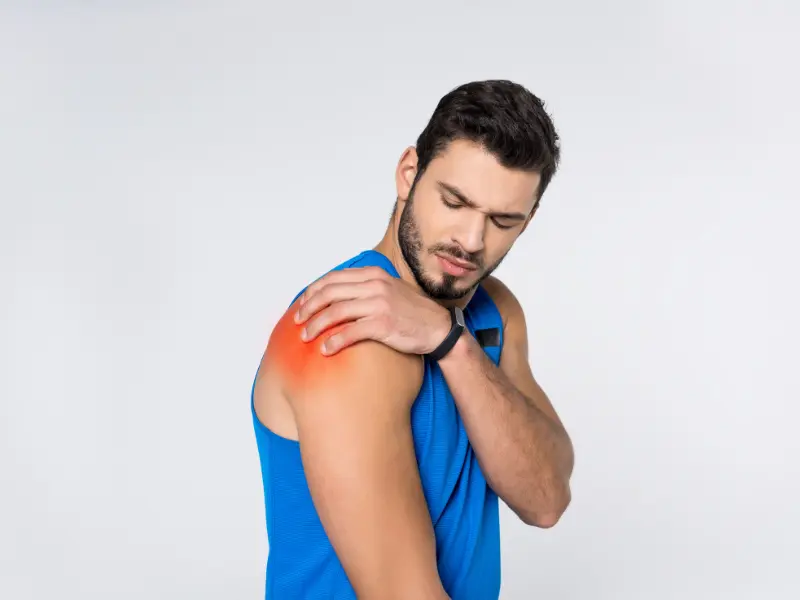
Shoulder pain can significantly impact your quality of life, limiting your ability to perform daily activities and enjoy your favorite pastimes. At NeoGenix, we specialize in an innovative, non-surgical shoulder pain treatment that offers relief and promotes healing. Our approach focuses on regenerative medicine techniques that harness your body’s natural healing abilities to address the root causes of shoulder pain.
What Causes Shoulder Pain?
- Arthritis
- Rotator Cuff Injuries
- Bursitis
- Tendinitis
- Frozen Shoulder
- Labral Tears
- Dislocation
Shoulder Pain Treatment Options
Effective Shoulder Pain Relief
If you are considering shoulder surgery, get a second opinion with NeoGenix. Stem Cell Therapy is an alternative, less invasive treatment that is easier and more successful in your recovery.
Stem Cell Therapy
NeoGenix specializes in stem cell therapy for shoulder pain. This innovative treatment uses your body’s stem cells, harvested from bone marrow or adipose tissue, to promote healing and regeneration of damaged tissues. Stem cell therapy can be effective for various shoulder conditions, including arthritis, rotator cuff injuries, and chronic cartilage degeneration.
PRP Treatment
Platelet-rich plasma (PRP) treatment involves using concentrated platelets from your blood to stimulate healing in the Shoulder. This treatment can be effective for tendon injuries, bursitis, and other soft tissue conditions.
Alternative to Shoulder Surgery
Many patients who have undergone stem cell treatments for shoulder pain and acute shoulder injuries have found this minimally invasive procedure to be an excellent alternative to total shoulder replacement, arthroscopic surgery, or rotator cuff surgery.
Non-Surgical Shoulder Pain Relief Solutions
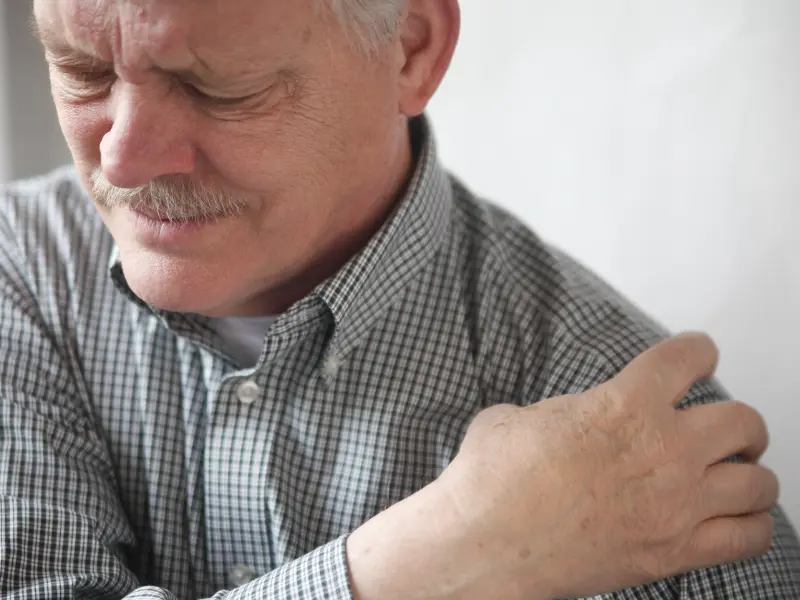
Our comprehensive approach to regenerative medicine combines various treatments, including stem cell therapy and PRP, to address shoulder pain. Depending on the severity and type of your condition, we may recommend a combination of treatments for optimal results. NeoGenix Stem Cells offers these innovative, non-surgical treatments as alternatives to invasive procedures. Our goal is to provide effective relief from shoulder pain while promoting natural healing and avoiding the lengthy recovery times associated with surgery.
Shoulder Doctor in Charlotte NC
How NeoGenix Diagnoses Shoulder Pain

Our experienced physicians, led by Dr. James Altizer, perform thorough physical examinations to assess your Shoulder’s range of motion, strength, and areas of pain or discomfort.

We use advanced imaging techniques, including ultrasound, to accurately diagnose shoulder conditions. This allows us to visualize soft tissue injuries and guide precise treatment.
Is Stem Cell Therapy for Shoulder Pain Effective?
Many patients find relief from pain and stiffness caused by shoulder injuries or osteoarthritis with stem cell treatments. Many research studies have demonstrated significant improvement in shoulder pain and acute tears following stem cell therapy, and numerous ongoing studies continue to evaluate the benefits.

Get Treated by a Top Shoulder Pain Doctor in Charlotte

NeoGenix is also founded by one of the most experienced stem cell treatment doctors in Charlotte, NC, Dr. James Altizer, who has been performing therapeutic procedures in North Carolina since January 2016. Dr. Altizer received expert training from recognized leaders in the regenerative medicine field, including training on bone marrow aspiration with Duke University-affiliated physicians. He has performed thousands of stem cell and growth factor procedures, more than any other medical doctor in the Carolinas.
%
NeoGenix patients success rate for shoulder pain treatment with many results lasting for years.

If you’re suffering from joint pain, don’t wait to seek treatment. Contact NeoGenix Stem Cell & Regenerative Therapies at 704-727-6551 for a free consultation.
Our team of regenerative medicine specialists, led by Dr. James Altizer, can assess your condition and recommend the most appropriate treatment plan to help you regain pain-free joint function.
Shoulder Pain FAQs
How long does it take to see results from stem cell therapy for shoulder pain?
Patients seeking shoulder pain treatment through stem cell therapy typically see initial improvements within 4-6 weeks after the procedure. However, the full benefits of this regenerative medicine approach often become more apparent over 3-6 months as the stem cells continue to promote healing and tissue repair. While individual results may vary, many patients report significant pain reduction and improved shoulder function within this timeframe. It’s important to note that stem cell treatment for shoulder pain is a gradual process, allowing the body to naturally heal itself. Patients are advised to follow post-treatment recommendations and attend follow-up appointments to monitor progress and optimize outcomes.
What are the typical recovery times for stem cell therapy in shoulder pain patients?
Patients seeking relief from shoulder pain through stem cell therapy can typically expect a relatively quick recovery compared to traditional surgical interventions. According to regenerative medicine experts, most patients experience minimal downtime, with initial recovery lasting about 1-2 weeks. During this period, patients may feel some soreness and stiffness in the treated area. Compared to surgical options, stem cell therapy offers a faster return to daily activities, making it an attractive option for those seeking non-invasive solutions for persistent shoulder pain.
How effective is stem cell therapy compared to traditional treatments for shoulder pain?
Stem cell therapy offers a promising alternative to traditional treatments for shoulder pain, with many patients experiencing significant relief and improved function. As a non-surgical option, stem cell therapy as a shoulder pain treatment can potentially accelerate healing and reduce inflammation more effectively than conventional methods. Regenerative medicine specialists use the body’s own stem cells to target the root cause of shoulder pain, potentially offering longer-lasting results compared to cortisone injections or physical therapy alone. While individual results may vary, many patients report reduced pain and increased mobility after undergoing stem cell treatments for shoulder conditions. If you’re seeking innovative solutions for chronic shoulder pain in the Charlotte area, including Lake Norman, consulting with our expert regenerative doctors could be a game-changing decision for your joint health and overall quality of life.
How does the recovery time for stem cell therapy compare to traditional treatments for shoulder injuries?
Stem cell therapy offers a significantly shorter recovery time compared to traditional treatments for shoulder injuries, making it an attractive option for those seeking natural shoulder pain relief. While surgical interventions often require months of rehabilitation, patients undergoing stem cell therapy typically experience minimal downtime, with most returning to normal activities within days or weeks. This regenerative medicine approach stimulates the body’s natural healing processes, potentially reducing pain and improving function faster than conventional methods. In many cases, stem cell therapy patients report noticeable improvements within weeks, with continued healing for up to a year post-treatment. For those exploring non-surgical alternatives, stem cell therapy presents a promising solution that balances effective treatment with a quicker return to daily life.
Are there any risks associated with stem cell therapy for shoulder pain?
Stem cell therapy for shoulder pain is generally considered a safe alternative treatment for shoulder pain relief, but like any medical procedure, it does carry some risks. The most common side effects include temporary pain, swelling, or bruising at the injection site. In rare cases, there may be a risk of infection or an allergic reaction. It’s important to choose the best stem cell treatment near you from a reputable provider like NeoGenix to minimize these risks. Reach out to our team of doctors today to determine if regenerative treatment is right for you.
What are the success rates of stem cell therapy for shoulder injuries?
Stem cell therapy shows promising success rates for treating shoulder injuries, with studies reporting significant improvements in pain and function. Research indicates that 70-80% of patients experience positive outcomes from this safe treatment for shoulder pain. Top stem cell treatment experts have found that combining stem cells with PRP therapy can further enhance healing and recovery. While more long-term studies are needed, many patients report reduced pain and improved mobility within 3-6 months after treatment. For rotator cuff tears specifically, success rates of 60-70% have been observed in repairing tissue and restoring function. Overall, stem cell therapy offers a non-surgical alternative with encouraging results for various shoulder conditions.
Are there any specific conditions or injuries that stem cell therapy is particularly effective for in the shoulder?
Stem cell therapy has shown promising results for several shoulder conditions, making it one of the best treatments for shoulder pain. This regenerative medicine approach is particularly effective for rotator cuff tears, osteoarthritis, and tendonitis of the shoulder. Patients with chronic shoulder pain or injuries that haven’t responded well to conventional treatments may find relief through stem cell therapy or PRP treatment. These innovative procedures can help reduce inflammation, promote tissue repair, and improve overall shoulder function without the need for invasive surgery. For those seeking non-surgical options in the Charlotte area, stem cell therapy offers a safe and potentially effective alternative for managing shoulder pain and restoring mobility.
Stem Cell Therapy for Tears and Strains
Stem Cell Therapy for Rotator Cuff Tears and Sprains
Stem Cell Therapy for Supraspinatus Tears and Sprains
Stem Cell Therapy for Subscapularis Tears and Sprains
Stem Cell Therapy for Infraspinatus Tears and Sprains
Stem Cell Therapy for Teres Minor Tears and Sprains
The rotator cuff consists of 4 muscles that surround and support the shoulder joint and allow full range of motion. As we age, the muscles get thinner and weaker and are very prone to strains and tears. The supraspinatus muscle on the top of the shoulder joint is the one most prone to traumatic damage. Stem cell therapy promotes healing of rotator cuff tears and strains. The stem cells can be injected directly to the exact location of the damaged muscle and tendon using live ultrasound imaging. In fact, ultrasound is just as good as an MRI at detecting rotator cuff tears and sprains. The recovery period after rotator cuff surgery is measured in MONTHS. That is MONTHS of rehabilitation, soreness, pain and inability to use the shoulder. Stem cell therapy can help rotator cuff heal and recover without resorting to invasive surgery, with a recovery time of WEEKS, not months.
Stem Cell Therapy for Osteoarthritis (Degenerative Joint Disease)
Osteoarthritis is a chronic degenerative progressive disease resulting in cartilage degeneration, osteophytes, and loss of joint function. So why doesn’t cartilage in shoulder joints self repair similar to a cut on your hand or a broken bone? Why can’t our body repair damaged shoulder cartilage before it gets thinner and thinner, eventually leading to denuded areas of bone on bone arthritis? The simple reason is that shoulder joints do not have adequate circulation. There is no artery inside any joint. Cartilage gets oxygen and nutrients that diffuse or are dissolved in tissue fluid that comes from the underlying bones. This circulation is enough to keep it alive, but is not adequate enough to repair damage that occurs with trauma, repetitive use, and aging. So over time and after trauma, our joint cartilage starts to wear out, sometimes slowly over years and sometimes very quickly over a few months. The only alternative to invasive surgery is stem cell therapy. Do not agree to surgery until you’ve gotten a second opinion to see whether or not stem cell therapy can help.
Shoulder joint arthritis can occur in 2 joints around the shoulder:
Glenohumeral joint arthritis (the shoulder joint itself) is usually seen in weight lifters or athletes that use their arms (like tennis players).
Acromioclavicular joint arthritis (the AC joint on top of the shoulder) is also affected by trauma and repetitive motions
Stem Cell Therapy for Labrum Tears and Strains
The labrum is the cup-shaped rim of cartilage that lines and reinforces the ball and socket joint of the shoulder, which is comprised of the glenoid – the shallow shoulder socket – and the head, or ball, of the upper arm bone known as the humerus. The labrum is the attachment site for the ligaments and supports the ball and socket joint along with the rotator cuff tendons and muscles. It contributes to shoulder stability and, when torn, can lead to partial or complete shoulder dislocation. Although athletes are most prone to labral tears, people who experience a traumatic event – such as falling down a flight of stairs – are also at risk, particularly older adults whose cartilage becomes more brittle with age. Labrum tears are generally treated with a combination of ultrasound-guided injections of stem cells directly into the labrum itself and stem cells into the Glenohumeral joint.
Stem Cell Therapy for Frozen Shoulder (Adhesive Capsulitis)
Frozen shoulder, also called adhesive capsulitis, is a painful condition in which the movement of the shoulder becomes limited. The condition is called “frozen” shoulder because the more pain that is felt, the less likely the shoulder will be used.
Lack of use causes the shoulder capsule to thicken and becomes tight, making the shoulder even more difficult to move — it is “frozen” in its position. It is more common in women between the ages of 40-60 and is caused by any shoulder injury or surgery that results in the need to keep the shoulder from moving (i.e., by using a shoulder brace, sling, shoulder wrap, etc.).
There are 2 stages of frozen shoulder:
The “freezing” stage: In this stage, the shoulder becomes stiff and is painful to move. The pain slowly increases. It may worsen at night. Inability to move the shoulder increases.
The “frozen” stage: In this stage, pain may lessen, but the shoulder remains stiff. This makes it more difficult to complete daily tasks and activities.
If conservative treatment with physical therapy and pain medications fail, the patient is usually put to sleep and the shoulder is either ‘manipulated’, i.e. forcibly moved through its range of motion to break lose any scar tissue, or scoped directly with an arthroscope to find and break up scar tissue. The diagnosis is usually made by taking a good history, carefully examining the shoulder, and getting x rays to rule out other problems. An MRI is usually not needed, but an ultrasound exam can confirm the diagnosis. Stem cell therapy for frozen shoulder is a minimally invasive treatment for patients who do not want to jump right to surgery.
Stem Cell Therapy for Bicep Tears and Strains
Similar to rotator cuff tears and strains, stem cell therapy promotes healing of bicep muscle and tendon tears and strains. The stem cells can be injected directly to the exact location of the damaged muscle and tendon using live ultrasound imaging. In fact, an ultrasound is just as good as an MRI at detecting bicep muscle and tendon tears and sprains. The recovery period after bicep muscle and tendon tear surgery is measured in MONTHS. That is MONTHS of rehabilitation, soreness, pain, and inability to use the shoulder. Stem cell therapy can help bicep muscles and tendons heal and recover without resorting to invasive surgery, with a recovery time of WEEKS, not months.
Request Your FREE Consultation
Thank you for your interest in NeoGenix. For more information, or to schedule a FREE consultation, please call or text us at 704-727-6551 or simply fill out the form below and a NeoGenix team member will respond as soon as possible.